Book Your Appointment
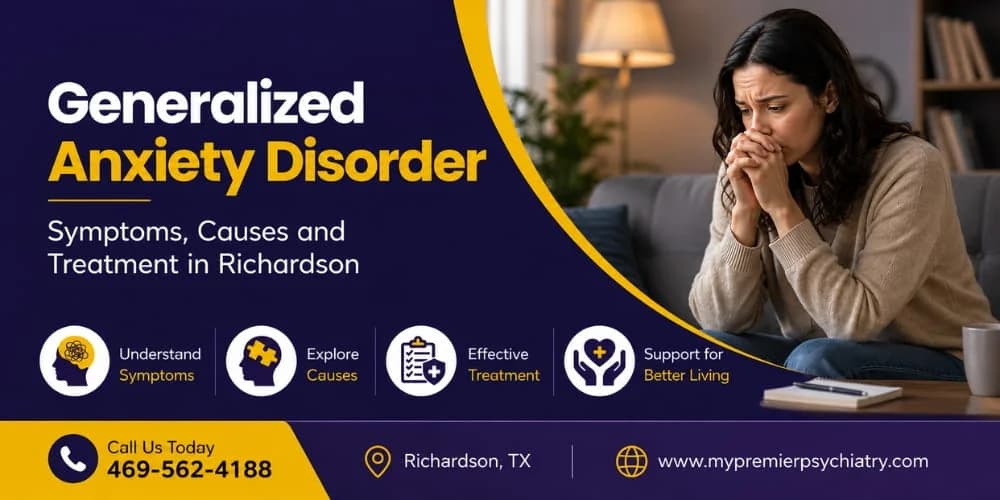
Generalized anxiety disorder, commonly called GAD, causes ongoing and excessive worry about work, health, finances, family, and relationships. Unlike temporary stress, these thoughts may be difficult to control. Anxiety disorders affect around 19.1% of U.S. adults each year, when GAD affects approximately 2.7%. Common symptoms include restlessness, fatigue, poor concentration, muscle tension, irritability, and sleep problems. Generalized anxiety disorder treatment options in Richardson, TX may include psychiatric evaluation, medication management, psychotherapy, stress-management techniques, and healthy lifestyle changes. Mayur Patel, MD, provides personalized psychiatric care based on each person’s symptoms, medical history, and daily challenges. With professional support and regular follow-up, many people can manage excessive worry, improve sleep and concentration, and develop healthier coping skills. Generalized anxiety disorder, also known as GAD, is a mental health condition that causes persistent and excessive worry about different areas of daily life. A person may feel anxious about work, health, finances, family responsibilities, relationships, or future events, even when there is no immediate danger or clear reason to worry. These anxious thoughts can be difficult to control and may continue for several months. GAD may also cause restlessness, fatigue, irritability, muscle tension, poor concentration, and sleep problems. When these symptoms begin affecting daily routines, work, or relationships, a psychiatric evaluation can help identify the condition and guide the best treatment plan. Generalized anxiety disorder can affect your thoughts, emotions, physical health, and overall quality of life. If these symptoms continue for several weeks or begin interfering with your daily routine, anxiety treatment in Richardson TX may help you better manage your condition. Below are some of the most common symptoms associated with generalized anxiety disorder. Symptoms include: Constant or excessive worry Feeling nervous or restless Difficulty controlling anxious thoughts Irritability Fear that something may go wrong Difficulty concentrating Fatigue or low energy Muscle tension Frequent headaches Difficulty falling or staying asleep Rapid heartbeat Stomach pain or nausea Generalized anxiety disorder may develop because of a combination of biological, psychological, environmental, and lifestyle factors. A psychiatrist for generalized anxiety disorder can review a person’s symptoms, medical history, family background, and daily stressors to identify possible contributing factors. Below are some common causes and risk factors linked with GAD. People with a family history of anxiety or other mental health conditions may have a higher chance of developing GAD. Genetic factors can influence how the brain responds to stress, fear, and uncertainty. Changes in brain chemicals involved in mood and stress regulation may contribute to anxiety symptoms. These chemical imbalances can affect emotional control, sleep, concentration, and the body’s response to stressful situations. Job loss, financial pressure, relationship problems, illness, trauma, or major life changes may trigger excessive worry. Long-term stress can also make existing anxiety symptoms more frequent or difficult to manage. People who are highly cautious, perfectionistic, self-critical, or uncomfortable with uncertainty may be more likely to experience ongoing anxiety. These thinking patterns can make everyday problems feel more serious or difficult to control. Certain health conditions, including thyroid problems, heart issues, chronic pain, or hormonal changes, may cause or worsen anxiety symptoms. A proper evaluation can help determine if physical health is contributing to the condition. Some prescription medications, excessive caffeine, alcohol, nicotine, or recreational substances may increase nervousness, restlessness, or rapid heartbeat. Withdrawal from certain substances can also cause symptoms that resemble anxiety. Early experiences such as family conflict, neglect, bullying, loss, or an unstable home environment may increase sensitivity to stress later in life. These experiences can shape how a person responds to fear and uncertainty. Living with work pressure, financial difficulties, caregiving responsibilities, family conflict, or an unsafe environment may keep the body in a constant state of stress. Over time, this may contribute to persistent anxiety and worry. Generalized anxiety disorder cannot be confirmed through an online quiz or symptoms checklist alone. A proper diagnosis requires a detailed psychiatric evaluation to understand how long the anxiety has been present, how severe it is, and how it affects daily life. The evaluation may include: Medical and mental health history Current symptoms and their duration Sleep, mood, and daily routine review Family history of mental health conditions Current medications and substance-use review Work, relationships, and stress-level assessment Screening for depression, panic disorder, OCD, or ADHD Ruling out thyroid problems and other physical conditions Discussion of previous mental health treatments A personalized diagnosis and treatment recommendation Generalized anxiety disorder can be managed with a treatment plan based on the severity of symptoms, medical history, daily challenges, and personal needs. Anxiety treatment in Richardson, TX may include psychiatric care, therapy, medication, lifestyle support, and regular follow-up appointments. Treatment usually begins with a detailed psychiatric evaluation. The psychiatrist reviews symptoms, triggers, sleep patterns, medical history, current medications, and how anxiety affects work, relationships, and daily responsibilities. Medication management may be recommended when anxiety symptoms are severe, persistent, or affecting daily life. A psychiatrist can prescribe suitable medication, monitor possible side effects, and adjust the treatment plan according to the patient’s response. Cognitive behavioral therapy, commonly called CBT, helps people identify negative thought patterns that contribute to excessive worry. It also teaches practical coping techniques for managing stress, anxious thoughts, and avoidance behaviors. Breathing exercises, mindfulness, relaxation methods, and healthy coping strategies may help reduce physical and emotional anxiety symptoms. These techniques can also improve emotional control during stressful situations. Regular physical activity, balanced meals, better sleep habits, and reduced caffeine intake can support anxiety management. Limiting alcohol, nicotine, and other substances may also help prevent symptoms from becoming more intense. A combination of medication, therapy, and healthy lifestyle changes may provide better support for managing anxiety. People searching for anxiety disorder treatment near me can explore a personalized care plan based on their symptoms, medical history, daily challenges, and treatment goals. Follow-up appointments allow the psychiatrist to monitor progress, review medication response, discuss side effects, and make necessary adjustments. Ongoing care can help improve symptom control and support long-term mental well-being. Occasional stress is normal, but persistent anxiety affecting sleep, work, relationships, or daily life may require professional care. An anxiety psychiatrist in Richardson can evaluate your symptoms and recommend suitable treatment. You should see a psychiatrist if: Worry is affecting your daily routine Sleep is regularly disturbed Your work or school performance is declining Relationships are being affected by ongoing anxiety Physical symptoms occur frequently, such as headaches, muscle tension, or a rapid heartbeat Self-help methods are no longer providing relief Anxiety is accompanied by depression or panic symptoms You may need a medication evaluation or treatment plan Generalized anxiety disorder is a treatable mental health condition, and early care can make a meaningful difference in managing symptoms. Ignoring persistent anxiety may affect sleep, work performance, relationships, and overall quality of life. Treatment may include a psychiatric evaluation, medication management, therapy referrals, stress-management techniques, and healthy lifestyle changes based on individual needs. Taking the first step toward care can help you regain control over excessive worry and daily stress. A mental health clinic in Richardson can provide personalized support, when Mayur Patel, MD, can help develop a best treatment plan. Schedule a consultation for generalized anxiety disorder treatment in Richardson, TX, and begin your path toward improved emotional well-being.What is Generalized Anxiety Disorder?
Common Symptoms of Generalized Anxiety Disorder
What Causes Generalized Anxiety Disorder?
Genetics and Family History
Brain Chemistry
Stressful Life Events
Personality Traits
Medical Conditions
Medications and Substance Use
Childhood Experiences
Ongoing Environmental Stress
How is GAD Diagnosed in Richardson, TX?
Generalized Anxiety Disorder Treatment Options in Richardson, TX
Psychiatric Evaluation
Medication Management
Cognitive Behavioral Therapy
Stress-Management Techniques
Lifestyle Changes
Combined Treatment
Regular Follow-Up Care
When Should You See a Psychiatrist for Anxiety?
Conclusion
FAQs
About Dr. Mayur Patel

Dr. Mayur Patel is an Interventional Psychiatrist specializing in the treatment of anxiety, depression, and mood disorders. He provides patient-centered care by understanding individual needs and developing personalized treatment plans. His approach includes advanced treatments, medications, TMS, and Spravato, combined with clear communication and compassionate support. Dr. Patel focuses on helping patients regain emotional balance, improve mental well-being, and achieve a better overall quality of life for lasting positive outcomes.