Book Your Appointment
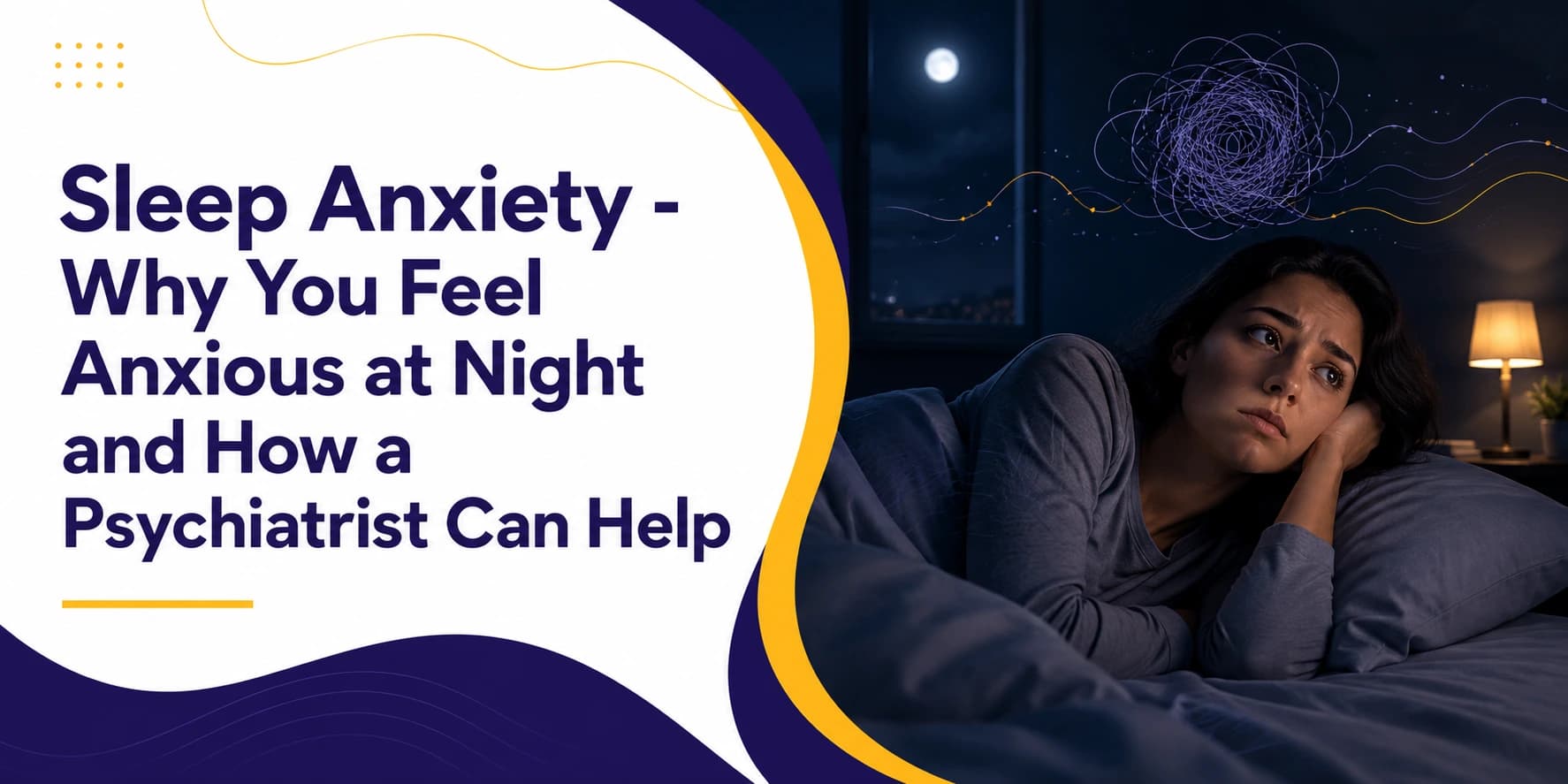
Sleep anxiety can turn bedtime into the most stressful part of the day. A person may feel tired all evening, but the moment the room gets quiet, the mind starts running. Thoughts about work, health, family, money, mistakes, tomorrow’s responsibilities, or the fear of not sleeping can feel louder at night. For many people, this becomes a cycle: anxiety makes sleep harder, poor sleep makes anxiety worse, and each night begins with the same worry.
Sleep anxiety is more than a bad night of rest. It can cause racing thoughts, chest tightness, restlessness, panic feelings, irritability, poor focus, low energy, and fear around bedtime. Some people lie awake for hours. Others fall asleep but wake up suddenly with a fast heartbeat or a sense of danger. When this pattern keeps happening, it may be linked with anxiety disorder, panic disorder, depression, PTSD, ADHD, bipolar disorder, chronic stress, or another mental health condition.
Premier Pain Centers & Premier Psychiatry helps patients understand why nighttime anxiety is happening and what treatment options may fit their symptoms. Mayur Patel, MD, Interventional Psychiatrist, evaluates sleep anxiety, mood changes, panic symptoms, medication needs, and related mental health concerns so patients can receive care that fits their daily life, sleep pattern, and long-term wellness goals.
What Is Sleep Anxiety?
Sleep anxiety means fear, stress, or worry connected to falling asleep, staying asleep, or going to bed. Some people feel anxious because they are afraid they will not sleep. Others worry that something bad may happen during the night. Some people feel unsafe, alert, or unable to relax even when there is no clear danger.
This condition can affect both the body and mind. The brain may stay on high alert, and the body may respond with a fast heartbeat, shallow breathing, sweating, trembling, stomach discomfort, or muscle tension. A person may know they need sleep, but the nervous system acts like it is still daytime and still solving problems.
Sleep anxiety may happen occasionally during stressful periods, but ongoing symptoms should not be ignored. A few restless nights after a major life event are common. Anxiety that keeps repeating, affects work, mood, relationships, school, driving, or daily energy may need psychiatric evaluation.
Why Anxiety Feels Worse at Night
Nighttime anxiety often feels stronger because the day becomes quiet. During the day, tasks, phone calls, work, family needs, and errands create distractions. At night, those distractions fade. The mind has more room to replay conversations, imagine worst-case outcomes, or focus on body sensations.
Stress hormones may also keep the body alert. A person may be exhausted but still feel wired. Screen time, late caffeine, irregular sleep schedules, alcohol, heavy meals, and poor sleep habits can make the problem worse. Some people also develop fear from past sleepless nights. After several difficult nights, the bed itself can start to feel like a place of pressure instead of rest.
For patients with anxiety disorder, PTSD, panic attacks, depression, or mood disorder, bedtime can bring emotional symptoms forward. PTSD may cause nightmares or fear of sleeping. Depression may cause early morning waking. Panic disorder may cause sudden awakenings with intense fear. ADHD may cause racing thoughts and delayed sleep. Bipolar disorder may cause reduced need for sleep during mood shifts. This is why sleep anxiety should be viewed as part of the full mental health picture.
Common Symptoms of Sleep Anxiety
Sleep anxiety does not look the same for every patient. Some people mainly struggle with overthinking. Others experience strong physical symptoms. Common signs may include:
Racing thoughts when trying to sleep
Fear of not falling asleep
Feeling tense, alert, or restless in bed
Checking the time repeatedly
Worrying about how tomorrow will feel without sleep
Fast heartbeat at night
Chest tightness or shortness of breath
Sweating, shaking, or chills
Stomach discomfort or nausea
Waking up suddenly with panic
Nightmares or distressing dreams
Trouble focusing the next day
Irritability, low mood, or emotional sensitivity
Avoiding bedtime because sleep feels stressful
A key sign of sleep anxiety is the fear cycle. A person worries about sleep, that worry keeps the body alert, the body stays awake, and the lack of sleep confirms the fear. Over time, the brain may begin to connect bedtime with danger, pressure, or failure.
Sleep Anxiety vs. Insomnia
Sleep anxiety and insomnia are related, but they are not exactly the same. Insomnia means trouble falling asleep, staying asleep, waking too early, or feeling unrefreshed despite enough time in bed. Sleep anxiety is the worry, fear, or panic connected to sleep.
A patient can have insomnia without major anxiety. Another patient may have anxiety that causes insomnia. Many people have both. For example, a person may first develop insomnia during a stressful month. After several bad nights, they begin worrying every evening that they will not sleep again. That worry becomes sleep anxiety, and the anxiety keeps the insomnia going.
Treatment works best when both sides are considered. Sleep hygiene may help, but it may not be enough when anxiety, panic attacks, depression, trauma, or medication side effects are part of the problem. A psychiatrist can look at the full pattern and help decide what type of care may work best.
How Many People Are Affected in Texas?
Sleep anxiety is common, but exact Texas numbers are hard to measure because it is often grouped under anxiety, insomnia, panic symptoms, or sleep disturbance. Still, current public data shows why this topic matters for Texas patients.
Texas has more than 31.7 million residents. About 24% are under age 18, which means the adult population is about 24.1 million. Using the national adult anxiety disorder rate of 19.1%, an estimated 4.6 million Texas adults may experience an anxiety disorder in a given year. Since anxiety often affects sleep, many of these patients may also struggle with bedtime worry, racing thoughts, or sleep disruption.
Sleep problems are also widespread in the state. Public health data shows that 36.9% of Texas adults report sleeping less than seven hours in a 24-hour period. Based on the adult population estimate, that equals about 8.9 million Texas adults with insufficient sleep. Not all of these people have sleep anxiety, but the overlap between stress, anxiety, poor sleep, depression, and daytime fatigue is clinically important.
These numbers show a clear need for accessible mental health care in Texas. Patients searching for anxiety treatment, sleep disorder care, an online psychiatrist in Texas, or the best psychiatrist near me may be looking for help because their symptoms are no longer manageable at home.
What Causes Sleep Anxiety?
Sleep anxiety can have many causes. Sometimes it starts after a stressful event, such as job pressure, grief, illness, relationship conflict, school stress, financial concern, or family responsibilities. Other times it develops slowly after months or years of chronic worry.
Common causes and contributing factors include:
Generalized Anxiety Disorder
Generalized anxiety can cause ongoing worry that becomes stronger at bedtime. A person may think through every possible problem before sleeping. Even small concerns can feel urgent at night.
Panic Disorder
Some patients experience panic symptoms while trying to sleep or after waking during the night. A fast heartbeat, shortness of breath, dizziness, or fear of losing control can make the person afraid to sleep again.
Depression
Depression can change sleep in different ways. Some people sleep too much, while others wake early or cannot fall asleep. Nighttime may also bring guilt, sadness, hopeless thoughts, or low motivation.
PTSD and Trauma
Trauma-related symptoms may include nightmares, hypervigilance, flashbacks, or feeling unsafe in the dark. A person may avoid sleep because the mind connects nighttime with vulnerability.
ADHD
ADHD can make it harder to slow the mind at night. Thoughts may jump quickly, and the patient may feel restless even when physically tired.
Bipolar Disorder
Changes in sleep can be an important sign in bipolar disorder. During certain mood shifts, a person may need less sleep, feel unusually energized, or stay awake with racing thoughts.
Stress and Lifestyle Habits
Late caffeine, irregular work hours, screen exposure, alcohol, heavy meals, lack of daytime sunlight, and inconsistent routines can all make sleep anxiety worse.
Can Sleep Anxiety Cause Nighttime Panic Attacks?
Yes, anxiety may be connected with nighttime panic symptoms. A person may wake suddenly with a racing heart, sweating, trembling, shortness of breath, chills, or a sense that something terrible is happening. These symptoms can be frightening because they appear while the person is asleep or just waking up.
Nighttime panic attacks can lead to fear of going back to bed. The person may begin sleeping with lights on, checking their pulse, avoiding sleep, or staying awake late to feel more in control. This can worsen sleep loss and increase daytime anxiety.
Chest pain, fainting, severe shortness of breath, or new medical symptoms should be checked urgently. Panic symptoms can feel similar to medical problems, so getting the right evaluation matters. After medical causes are ruled out, psychiatric care can help identify panic disorder, anxiety disorder, trauma symptoms, medication triggers, or other mental health factors.
How a Psychiatrist Can Help With Sleep Anxiety
A psychiatrist can help by looking at the full picture, not just the number of hours slept. Sleep anxiety may be connected with mood, trauma, panic, ADHD, depression, medication use, medical history, substance use, caffeine intake, work stress, and family patterns. A psychiatric evaluation helps organize these details.
During an appointment, the psychiatrist may ask about:
When the sleep anxiety started
How long it takes to fall asleep
How often the patient wakes at night
Panic symptoms or nightmares
Mood changes
Depression symptoms
Trauma history
Medication or supplement use
Caffeine, nicotine, alcohol, or substance use
Work schedule and daily routine
Past mental health treatment
Safety concerns or thoughts of self-harm
The goal is to identify what is driving the symptoms. For one patient, the main issue may be generalized anxiety. For another, it may be a panic disorder. Another patient may need help for depression, PTSD, ADHD, bipolar disorder, or sleep disorder symptoms. A clear diagnosis helps guide safer and more useful treatment.
Treatment Options for Sleep Anxiety
Treatment depends on the cause, symptom severity, medical history, and patient goals. Sleep anxiety often improves with a mix of behavioral changes, therapy, psychiatric support, and medication when needed.
Psychiatric Evaluations
A psychiatric evaluation helps connect sleep symptoms with mental health patterns. This may be the first step for patients who feel stuck, confused, or unsure why anxiety appears at night.
Medication Management
Medication management may help when anxiety, panic attacks, depression, ADHD, or mood symptoms are affecting sleep. A psychiatrist can review current medications, past side effects, possible interactions, and safe options. Medication is not always needed, but for some patients it can reduce symptom intensity and help restore stability.
Telepsychiatry
Telepsychiatry can help Texas patients access care without long travel, missed work, or added stress. Online appointments may be useful for patients with anxiety, depression, sleep-related worry, medication follow-up needs, or busy schedules.
Therapy and CBT-Based Care
Many patients benefit from therapy that works on worry patterns, fear of sleep, panic symptoms, and behaviors that keep the cycle going. CBT-based methods can help patients challenge catastrophic thoughts like “I will never sleep again” or “I cannot function tomorrow.”
TMS Therapy
TMS Therapy may be considered for certain patients with depression symptoms, mainly when standard treatments have not worked well enough. Since depression and sleep disruption often overlap, evaluation can help decide whether advanced care may be appropriate.
Spravato® Therapy
Spravato® may be an option for eligible patients with treatment-resistant depression. A psychiatrist can decide if this treatment fits the patient’s diagnosis, safety profile, and treatment history.
IV Ketamine Therapy
IV Ketamine Therapy may be considered for select patients with difficult-to-treat mood symptoms. It is not a first step for simple sleep anxiety, but it may be discussed when depression or severe mood symptoms are part of the case.
Steps That May Help Calm Anxiety Before Bed
Simple steps may reduce sleep anxiety for some patients. These habits work best when used consistently.
Keep a regular wake time. Waking at the same time each day can help train the body’s sleep rhythm.
Create a wind-down period. Give the mind a transition from daytime pressure to nighttime rest. This may include reading, calm music, stretching, prayer, journaling, or breathing exercises.
Limit clock watching. Checking the time repeatedly can increase pressure and panic.
Reduce caffeine later in the day. Caffeine can stay active for hours and may worsen anxiety and sleep delay.
Move worry out of bed. Writing down concerns earlier in the evening may help the brain stop treating bedtime as planning time.
Use the bed mainly for sleep. Working, scrolling, arguing, or watching stressful content in bed can train the brain to stay alert there.
Practice slow breathing. Longer exhales can signal the body to slow down.
Get help when self-care is not enough. Sleep anxiety that lasts for weeks, causes panic, affects daily life, or connects with depression deserves care.
When to Search for the Best Psychiatrist Near Me
A search for the best psychiatrist near me often begins when symptoms start affecting normal life. For sleep anxiety, that may mean the patient is missing work, feeling exhausted, snapping at family, avoiding bedtime, relying on alcohol or sleep aids, or waking in panic.
Consider psychiatric care when:
Anxiety keeps you awake most nights
You wake up with panic symptoms
Sleep problems last longer than a few weeks
Racing thoughts feel uncontrollable
Depression or hopelessness is present
Nightmares or trauma symptoms disrupt sleep
You are using alcohol, sedatives, or other substances to sleep
You feel unsafe or have thoughts of self-harm
Medication side effects may be affecting sleep
You need an online psychiatrist in Texas for anxiety and sleep problems
Psychiatry clinic in Richardson offers in-person and virtual psychiatric care for patients seeking support for anxiety, depression, ADHD, PTSD, OCD, bipolar disorder, mood disorder, schizophrenia, sleep disorder symptoms, and related concerns.
Sleep Anxiety and Other Mental Health Conditions
Sleep anxiety may be the main complaint, but it is often connected with other symptoms. A patient may say, “I just can’t sleep,” but deeper evaluation may show ongoing anxiety, panic attacks, trauma symptoms, depression, ADHD, or mood instability.
Anxiety can make the brain scan for threats at night. Depression can cause early waking and low energy. PTSD can cause nightmares and hypervigilance. ADHD can keep thoughts moving. Bipolar disorder can change sleep needs during mood shifts. OCD can cause repeated checking, intrusive thoughts, or bedtime rituals that delay sleep.
This is why a one-size answer rarely works. A sleep supplement or basic bedtime tip may not solve the problem when the root issue is psychiatric. Care should match the cause.
Why Choose Premier Pain Centers & Premier Psychiatry?
Premier Pain Centers & Premier Psychiatry provides mental health care with attention to both symptoms and daily life impact. Patients can receive psychiatric evaluations, medication management, telepsychiatry, TMS Therapy, Spravato® Therapy, and IV Ketamine Therapy when clinically appropriate.
Mayur Patel, MD, Interventional Psychiatrist, works with patients dealing with anxiety, depression, ADHD, bipolar disorder, trauma-related symptoms, and treatment-resistant conditions. The goal is to help patients understand their symptoms, review safe treatment options, and build a care plan that supports better stability.
Final Thoughts
Sleep anxiety can feel lonely, but it is treatable. Bedtime fear, racing thoughts, panic at night, insomnia from anxiety, or waking with dread are signs that the mind and body may need support. The earlier a patient gets help, the easier it may be to break the cycle before it affects work, mood, health, and relationships.
Premier Pain Centers & Premier Psychiatry helps patients take the next step with psychiatric evaluation, medication management, telepsychiatry, and advanced treatment options when needed. A better night’s sleep often starts with finding out why anxiety is happening in the first place.
FAQs
About Dr. Mayur Patel

Dr. Mayur Patel is an Interventional Psychiatrist specializing in the treatment of anxiety, depression, and mood disorders. He provides patient-centered care by understanding individual needs and developing personalized treatment plans. His approach includes advanced treatments, medications, TMS, and Spravato, combined with clear communication and compassionate support. Dr. Patel focuses on helping patients regain emotional balance, improve mental well-being, and achieve a better overall quality of life for lasting positive outcomes.