Book Your Appointment
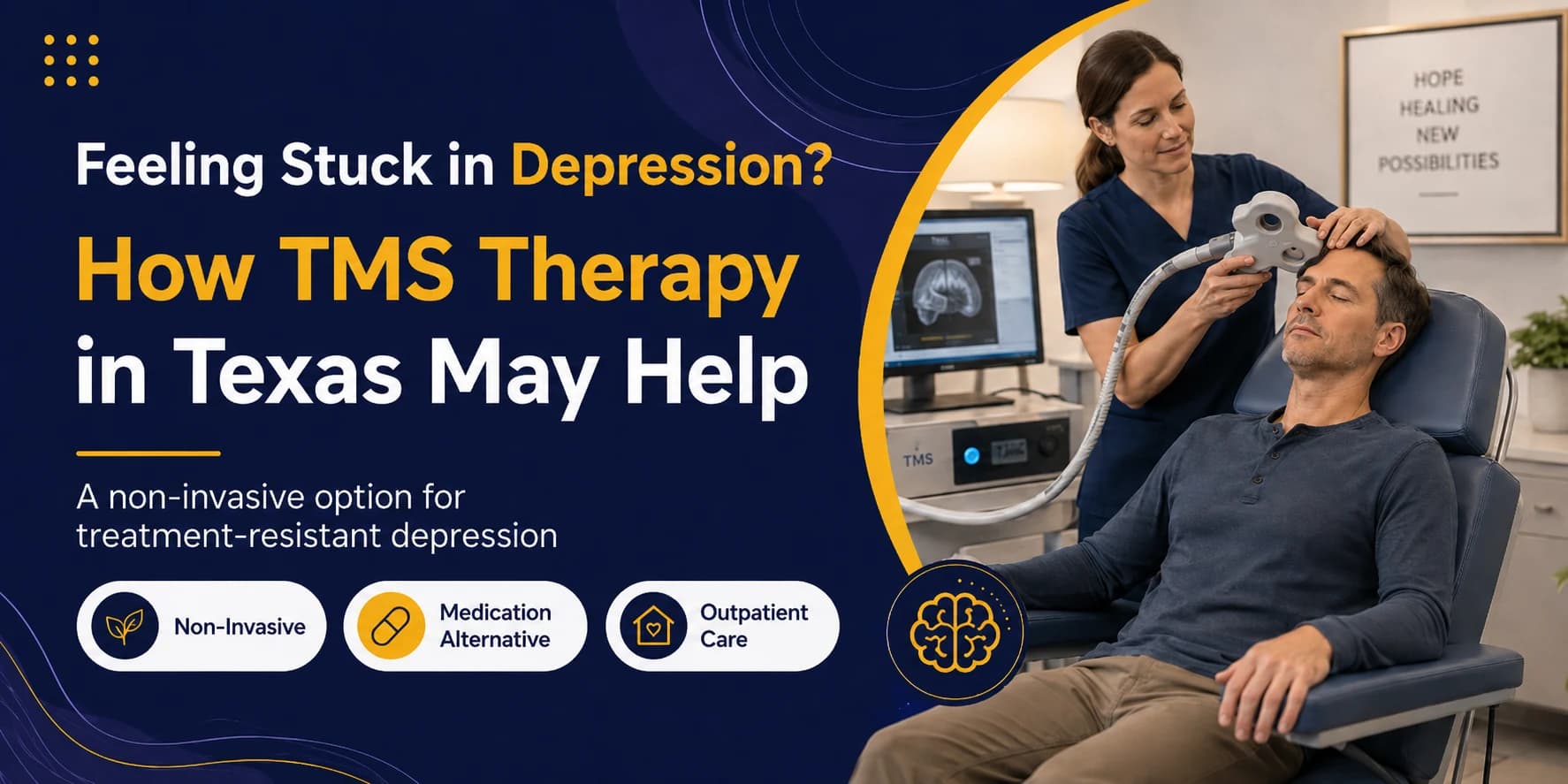
Depression can make life feel paused while everything around you keeps moving. You may still go to work, answer messages, and complete daily tasks, yet feel emotionally distant, mentally exhausted, or unable to enjoy the people and activities that once mattered. When counseling or antidepressant medication has not provided enough relief or side effects have made treatment difficult, TMS therapy for depression in Texas may offer another path. This non-invasive, office-based treatment uses focused magnetic pulses to stimulate brain networks involved in mood regulation. It does not require surgery, anesthesia, or a hospital stay, and many patients return to their usual activities after each appointment. Depression is more than temporary sadness. Major depressive disorder can affect sleep, appetite, concentration, energy, motivation, work, relationships, and daily responsibilities. The National Institute of Mental Health notes that depression can range from mild to severe and may interfere with normal activities. It may also increase the risk of suicidal thoughts or behavior. For people who have tried several options without meaningful progress, learning about TMS treatment for depression can be a practical next step. TMS stands for transcranial magnetic stimulation. It is a non-invasive depression treatment that uses an electromagnetic coil placed gently against the scalp. The device sends repeated magnetic pulses toward a selected area of the brain associated with mood control. These pulses create small electrical currents that stimulate neurons and brain circuits. Unlike electroconvulsive therapy, TMS does not apply electricity directly to the head, does not intentionally cause a seizure, and usually does not require anesthesia. The patient remains awake during the session. TMS is not a medication. It does not travel through the bloodstream, which is one reason people seeking depression treatment without medication ask whether it may fit their care plan. Depression is linked with changes in brain networks involved in mood, attention, decision-making, and emotional regulation. During TMS depression treatment, magnetic pulses are directed toward a brain region selected by the treating clinician, often an area in the prefrontal cortex. Repeated stimulation is intended to influence activity in these circuits over time. Improvement may develop gradually across a series of sessions rather than immediately after the first appointment. The first visit usually includes mapping and motor-threshold testing. These steps help the clinical team identify the treatment location and set the stimulation strength. During later visits, the coil is positioned in the same target area and the prescribed protocol is delivered. A typical course may involve sessions five days a week for several weeks. NIMH states that standard repetitive TMS sessions may last about 3 to 40 minutes, with a common course involving weekday sessions for four to six weeks. The schedule can vary by device, protocol, diagnosis, progress, and insurance requirements. TMS therapy for treatment-resistant depression is often considered when a person has major depressive disorder and has not received enough benefit from one or more antidepressant trials. It may also be discussed when medication causes side effects that the patient cannot tolerate. A psychiatrist may review: Current depression symptoms How long the symptoms have continued Previous antidepressant medications Medication doses and treatment periods Benefits or side effects from past medications Previous psychotherapy or counseling Other mental health diagnoses Seizure or neurological history Implanted medical devices Current medications and substance use Suicidal thoughts or other safety concerns TMS is not automatically right for every person who feels depressed. A full psychiatric assessment matters because depression-like symptoms can sometimes be related to bipolar disorder, medication effects, substance use, grief, sleep disorders, thyroid problems, trauma, or another medical or psychiatric condition. Patients searching for a treatment-resistant depression specialist in Texas should ask whether the provider performs a detailed diagnostic evaluation before recommending treatment. A treatment review may be appropriate when: You have taken medication as prescribed but remain depressed Medication side effects interfere with daily life Your symptoms improve briefly and return You have tried more than one treatment without reaching remission Depression continues to affect your work or relationships Sleep, concentration, energy, or motivation remain poor You feel emotionally numb or disconnected Everyday responsibilities feel difficult to manage These concerns do not prove that TMS is the next treatment you need. They do suggest that a psychiatrist should reassess the diagnosis, medication history, therapy plan, and available treatment options. A TMS appointment is generally completed in an outpatient mental health clinic. You sit in a treatment chair while a trained team member positions the magnetic coil against your scalp. You may hear clicking sounds and feel tapping or pulsing sensations. Ear protection may be provided. The intensity may be increased gradually according to your treatment plan and comfort. Patients remain awake and can communicate throughout the session. No incision is made, and there is usually no sedation. The American Psychiatric Association describes TMS as a treatment that can be provided without anesthesia and used for depression and certain other conditions. Because treatment often involves frequent appointments, consider your work schedule, transportation, childcare, and travel distance before beginning a full treatment course. There is no single timeline that applies to every patient. Some people notice changes during the first few weeks, while others improve later in the treatment course. Early changes may include: Getting out of bed more easily Completing routine tasks Sleeping more regularly Having fewer persistent negative thoughts Feeling less emotionally overwhelmed Reconnecting with family or friends Returning to hobbies Concentrating more easily Feeling more hopeful about treatment Clinicians may use standardized depression rating scales before and during treatment to measure progress. TMS does not guarantee remission. The American Psychiatric Association reports that about one in two patients receiving TMS for depression showed a significant response and about one in three reached remission. Results can vary based on the patient, protocol, illness severity, previous treatment history, and other clinical factors. TMS itself does not involve taking a drug. However, that does not always mean a patient stops antidepressants. Some people receive TMS while continuing medication and psychotherapy. Others are referred because medication has not helped enough or has caused difficult side effects. Any medication change should be made with the prescribing clinician. Suddenly stopping an antidepressant may cause withdrawal symptoms, mood changes, or a return of depression. TMS is better understood as a different treatment method, one that uses targeted magnetic stimulation rather than medication circulating throughout the body. Antidepressants are taken at home and may help many people, particularly when combined with psychotherapy. However, finding the right medication and dosage can take time. Some patients experience: Nausea Sleep changes Sexual side effects Weight changes Fatigue Restlessness Emotional blunting Difficulty concentrating TMS requires frequent clinic visits during the active treatment phase. Its potential benefit is that stimulation is directed toward selected brain circuits without the same type of systemic medication exposure. CMS describes TMS as a non-invasive treatment that may provide an antidepressant benefit without the systemic side effects associated with standard oral medication. The decision is not always TMS versus medication. Some patients receive TMS alongside antidepressants, psychotherapy, sleep support, physical activity, and ongoing psychiatric follow-up. TMS is generally well tolerated, but it can cause side effects. Common concerns may include: Scalp discomfort Headache Tingling sensations Facial muscle movement Lightheadedness Temporary discomfort at the stimulation site These effects may be more noticeable during the first several sessions and can become less bothersome as the patient adjusts. Seizure is a rare but serious risk. Patients should tell the treating clinician about: A personal or family history of seizures Neurological conditions Previous head injuries Metal in or near the head Implanted medical devices Medication changes Alcohol or substance use Significant sleep deprivation TMS should be provided under qualified clinical supervision with regular monitoring for symptoms, side effects, comfort, and safety. People ask, “What is TMS therapy for depression and anxiety?” may be dealing with depression that also includes worry, physical tension, racing thoughts, restlessness, or panic symptoms. TMS is cleared for certain forms of depression, including depression with anxious distress. However, anxiety can have several causes, so the treatment target and expected benefit depend on the psychiatric assessment. A psychiatrist should determine whether anxiety is: Part of major depressive disorder A separate anxiety disorder Related to trauma A medication side effect Connected to a medical condition Associated with another psychiatric diagnosis Psychotherapy, medication, or other mental health services may still be needed even when TMS is included in the care plan. TMS for OCD uses a different approach from standard TMS for depression. The targeted brain region, coil design, stimulation pattern, and symptom-monitoring process may differ. The FDA permitted marketing of a TMS system for obsessive-compulsive disorder in 2018. TMS may therefore be used for certain eligible patients with OCD, but insurance rules and clinical requirements can vary. Anyone seeking TMS for OCD should receive an OCD-specific assessment rather than assume a depression protocol will address obsessive thoughts or compulsive behaviors. Many commercial insurance plans and some Medicare policies may cover TMS when medical-necessity requirements are met. Common requirements may include: A confirmed major depressive disorder diagnosis Documentation of previous antidepressant trials Inadequate improvement from medication Intolerable medication side effects A psychiatric evaluation Standardized depression assessments Prior authorization Treatment ordered or supervised by an eligible clinician Coverage is plan-specific. Deductibles, copays, required medication trials, approved session counts, and authorization timelines can vary. Before starting TMS therapy in Texas, ask the clinic to verify your benefits and explain: What records the insurer needs Whether prior authorization is required Your estimated out-of-pocket cost How many sessions are initially approved What happens when additional treatment is recommended Whether maintenance treatment may be covered Insurance verification is not a guarantee of payment, but it can help patients understand likely costs before treatment begins. Searching “TMS therapy near me” or “best psychiatrist near me in Texas” may produce many listings, but location alone should not guide the decision. Consider asking the clinic: Who completes the psychiatric evaluation? Is the diagnosis reviewed before treatment begins? Who approves the TMS protocol? How will my symptoms be measured? How are side effects handled? What happens if my symptoms worsen? Will the clinic communicate with my therapist? Does the office help with insurance authorization? What follow-up is available after treatment? Are depression and OCD assessed separately? Mayur Patel, MD, Interventional Psychiatrist, works with patients at Premier Pain Centers & Premier Psychiatry to evaluate depression symptoms, previous treatment response, safety considerations, and whether TMS may be an appropriate option. The decision should be based on your clinical history and treatment needs rather than a brief screening or online keyword search. Access matters because a standard TMS schedule may involve frequent weekday appointments. Patients looking for TMS therapy in Richardson, TX may find the location practical for North Dallas and nearby communities. TMS treatment in Ennis, TX can provide another option for patients south of Dallas who may not want to travel into the city for every session. Premier Pain Centers & Premier Psychiatry serves patients seeking: Depression treatment in Dallas, TX TMS therapy in Richardson, TX TMS treatment in Ennis, TX Non-medication depression treatment in Texas TMS therapy near Dallas, Texas Psychiatric evaluation for treatment-resistant depression TMS is scheduled treatment; it is not emergency care. If you are in immediate danger, have a plan to harm yourself, cannot remain safe, or are experiencing a life-threatening crisis, call 911 or go to the nearest emergency department. In the United States, you can also call or text 988 to reach the Suicide & Crisis Lifeline at any time. Feeling stuck does not mean you have failed treatment. It may mean your current treatment plan needs a fresh clinical review. TMS therapy for depression in Texas may be considered for adults who continue to experience major depressive symptoms despite medication, therapy, or both. It provides a non-invasive, office-based option that does not require surgery or anesthesia. To learn whether TMS may fit your care plan, schedule an evaluation with Mayur Patel, MD,, at Premier Psychiatry. The evaluation can help clarify your diagnosis, review previous treatments, discuss potential benefits and risks, check insurance requirements, and identify the next appropriate step in your depression care.What Is TMS Therapy for Depression?
How Does TMS for Depression Work?
Who May Be a Candidate for TMS Therapy for Depression in Texas?
Signs Your Depression Plan May Need Review
What Happens During a TMS Session?
When Might Improvement Begin?
Is TMS a Depression Treatment Without Medication?
TMS Therapy vs. Antidepressant Medication
Common Side Effects and Safety Considerations
Can TMS Help Depression and Anxiety?
What About TMS for OCD?
Does Insurance Cover TMS Treatment for Depression in Texas?
Choosing a TMS Psychiatrist in Texas
TMS Therapy in Richardson, Ennis, and Dallas
When Depression Feels Urgent
Take the Next Step Toward Depression Care
FAQs
About Dr. Mayur Patel

Dr. Mayur Patel is an Interventional Psychiatrist specializing in the treatment of anxiety, depression, and mood disorders. He provides patient-centered care by understanding individual needs and developing personalized treatment plans. His approach includes advanced treatments, medications, TMS, and Spravato, combined with clear communication and compassionate support. Dr. Patel focuses on helping patients regain emotional balance, improve mental well-being, and achieve a better overall quality of life for lasting positive outcomes.